
##AutumnInKashmir
##DalLake
##Gulmarg
##Kashmir2026
##KashmirHouseboat
##KashmirSnowfall
##KashmirTour
##KashmirTravel
##MagicSafari
##NorthIndiaTravel
##Pahalgam
##Sonamarg
##Srinagar
##WinterInKashmir
##WinterInParadise
#Autumn to Winter in Kashmir: The Complete Guide to Srinagar Gulmarg Pahalgam and Sonamarg
Kashmir Is Changing Seasons: What to Expect in Srinagar, Gulmarg and Pahalgam This Autumn
By: Magic Safari | September 2026
There is a moment in Kashmir when summer quietly steps aside.
The meadows begin to lose their intense green.
The mornings turn cooler.
A faint mist settles over Dal Lake.
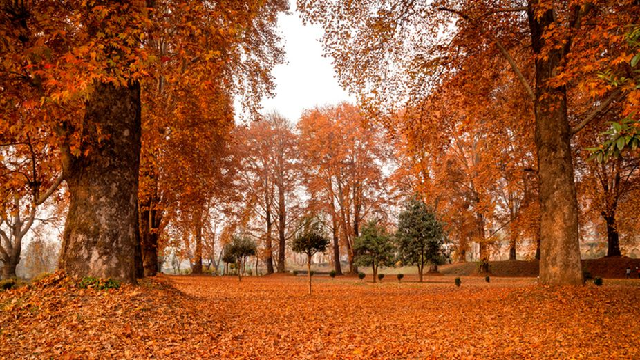
The chinar leaves begin their famous transformation, moving through shades of green, gold, amber and crimson.
And somewhere high above the valley, winter starts knocking on the door.
This is autumn in Kashmir.
And then comes the second act.
The temperature drops further.
The mountains begin to wear white.
Gulmarg prepares for the ski season.
Pahalgam becomes quieter.
The air gets sharper.
Srinagar’s mornings become wrapped in cold mist.
Kashmir starts moving towards its most dramatic season.
Winter in paradise.
For travellers looking beyond the conventional summer Kashmir holiday, this transition offers something different—fewer layers of tourist-season frenzy, changing landscapes, crisp mountain air and the possibility of experiencing Kashmir as it prepares for winter.
That is the idea behind Magic Safari’s Kashmir holiday experiences: not simply ticking off Srinagar, Gulmarg and Pahalgam, but experiencing the valley as a living destination that changes dramatically with the seasons.
Why Autumn in Kashmir Is One of the Valley’s Most Beautiful Secrets
Ask most travellers to describe Kashmir and they will probably mention snow.
But Kashmir’s beauty doesn’t begin with snowfall.
Long before the first serious snow arrives, the valley stages one of nature’s most spectacular colour changes.
The chinar trees become the stars.
Their leaves turn golden, copper and deep red, creating a landscape that looks almost painted.
Srinagar becomes particularly atmospheric during this transition.
Dal Lake reflects the changing sky.
The Mughal gardens take on a quieter personality.
The surrounding mountains become sharper against the cool autumn air.
And the valley begins preparing for winter.
Official Incredible India information describes Srinagar as a year-round destination whose character changes with the seasons, from spring gardens to winter landscapes. Its current destination guide lists October temperatures broadly around 1.9°C to 28.2°C and November around -2.6°C to 21.6°C, illustrating the substantial seasonal shift.
In other words:
Autumn is not simply “before winter.”
It is a season in its own right.
The Kashmir Calendar: From Gold to White
The easiest way to understand Kashmir’s seasonal transformation is to imagine the valley as a four-act story.
Spring — Kashmir Blooms
Tulips, flowers, gardens and fresh greenery.
Summer — Kashmir Breathes
Pleasant temperatures, lush valleys and outdoor adventures.
Autumn — Kashmir Turns Gold
Chinars change colour, temperatures fall and the valley becomes increasingly atmospheric.
Winter — Kashmir Turns White
Snow arrives at higher elevations and winter sports take centre stage.
The transition between autumn and winter is particularly fascinating because you can sometimes experience two versions of Kashmir during the same trip.
One valley may still be golden.
A higher mountain destination may already be showing signs of winter.
That contrast is one of the strongest reasons to travel during the shoulder season.
Srinagar in Autumn: Wake Up Before the City Does
If there is one experience that should begin early, it is Dal Lake.
Before the roads become busy, before the city fully wakes up, the lake has a different personality.
The water is still.
Shikaras move quietly.
The mountains appear through the morning haze.
And the floating world of Srinagar begins its day.
Incredible India specifically recommends visiting Dal Lake early in the morning to experience Srinagar’s floating market, while also highlighting its houseboats, shikaras and floating gardens.
This is why an autumn Kashmir itinerary should not begin with a packed sightseeing schedule.
Begin slowly.
Take the shikara.
Drink the tea.
Watch the lake.
Then explore the city.
Dal Lake Houseboat Stay: Your Hotel Becomes the Destination
There are places where the hotel is simply where you sleep.
And then there are places where the accommodation becomes part of the journey.
A Dal Lake houseboat belongs firmly in the second category.
For couples, it creates a romantic escape.
For families, it becomes an experience children remember.
For photographers, early morning light on the lake is difficult to resist.
And for first-time visitors, it offers one of the most distinctive ways to experience Srinagar.
Incredible India itself highlights houseboat accommodation as one of the experiences available around Dal Lake.
The ideal autumn houseboat morning?
A warm room.
A hot cup of kahwa.
Mist over the lake.
A slow shikara ride.
And absolutely nowhere you need to be for the next hour.
That is luxury of a very different kind.
Srinagar’s Mughal Gardens: Autumn Adds Another Layer
Srinagar’s Mughal gardens are usually associated with spring and summer blooms.
But autumn changes the visual story.
Nishat Bagh.
Shalimar Bagh.
Chashme Shahi.
The terraces, fountains and historic architecture remain, but the surrounding foliage begins changing colour.
Incredible India identifies Nishat Bagh, Shalimar Bagh and Chashme Shahi among Srinagar’s signature Mughal gardens and highlights their terraces, fountains and views towards Dal Lake.
The result is a very different photographic experience.
Less floral.
More atmospheric.
Less bright.
More dramatic.
Chinar Season: Kashmir’s Most Photogenic Autumn Moment
If one image defines autumn in Kashmir, it is the chinar leaf.
The trees have long been part of Kashmir’s landscape and cultural identity, but during autumn they become impossible to ignore.
The leaves change colour.
The ground becomes carpeted with gold and red.
Roads and gardens acquire a cinematic quality.
And suddenly, even an ordinary walk becomes a photograph.
For travellers who love photography, autumn may actually offer an advantage over peak summer.
The light is softer.
The colours are richer.
The atmosphere is cooler.
And the landscape feels more layered.
Gulmarg: From Meadow of Flowers to Winter Wonderland
Gulmarg is one of the most fascinating destinations in Kashmir because it changes dramatically with the seasons.
In warmer months, it is the “Meadow of Flowers.”
In winter, it becomes a snow-sports destination.
In between those extremes lies the autumn transition.
The grasslands change.
The air gets colder.
The surrounding Pir Panjal peaks become increasingly dramatic.
And the first serious winter weather begins to announce itself.
Official Incredible India describes Gulmarg as a destination that transforms across seasons—from summer meadows to a winter landscape built around snow and adventure.
That makes autumn an intriguing time to visit.
You are not necessarily chasing snow.
You are watching the mountain prepare for it.
And About Gulmarg Snowfall…
Let’s address the question every traveller asks.
“Will there be snow when I visit?”
Possibly.
But nobody should promise it for a specific date.
Weather patterns vary from year to year, and snowfall depends on elevation and conditions.
Even official tourism material describes Gulmarg’s snow-covered landscape in the context of winter rather than guaranteeing snow on a particular calendar date.
So the smarter way to plan is:
Visit Gulmarg for the mountains.
Enjoy the snow if it arrives.
That way, the holiday cannot be ruined by the weather.
Pahalgam in Autumn: Where Kashmir Slows Down
Pahalgam is where the rhythm changes.
The roads become scenic.
The Lidder River accompanies the journey.
Pine and conifer forests frame the valley.
And the landscape feels less like a city escape and more like a genuine mountain retreat.
Incredible India describes Pahalgam as a Himalayan valley surrounded by forests, mountains and rivers and identifies it as a destination for both nature and adventure.
Autumn gives Pahalgam a special atmosphere.
The crowds can thin compared with peak periods.
The air gets colder.
The landscape becomes increasingly golden.
And the valley begins its slow preparation for winter.
Pahalgam to Aru Valley: Follow the Road Less Rushed
A Kashmir itinerary should not be designed like a race.
If time permits, consider extending the Pahalgam experience towards areas such as Aru Valley, subject to current road and local conditions.
Official Incredible India itineraries highlight Pahalgam, Betaab Valley, Chandanwadi and Aru Valley among the experiences available in the region.
The point is not to collect place names.
The point is to experience the landscape.
Stop.
Photograph.
Walk.
Have tea.
Look at the river.
Then continue.
Sonamarg: The Valley That Leads Towards Winter
Sonamarg—literally associated with the idea of a “meadow of gold”—is another destination worth considering during the autumn-to-winter transition.
Its mountain landscape becomes increasingly dramatic as temperatures fall.
Official Incredible India material highlights Sonamarg’s Himalayan setting and its winter transformation, including snow-based activities when conditions permit.
But accessibility can become weather-dependent as winter approaches.
That makes local travel advice particularly important.
A good operator should check conditions before confirming a day’s excursion.
Kashmir in October vs Kashmir in November
This is one of the most useful questions for travellers.
Kashmir in October
Think:
🍂 Chinar colours
🌤 Pleasant-to-cool daytime weather
📸 Excellent photography
🏞 Autumn landscapes
🌙 Increasingly chilly evenings
October can be ideal for travellers who want autumn without committing to deep winter.
Kashmir in November
Think:
❄️ Colder mornings
🏔 More pronounced winter atmosphere
🌫 Misty landscapes
🧥 Heavy winter clothing
🏔 Increasing possibility of snow at higher elevations
Official destination data shows the significant temperature drop between October and November in Srinagar and Pahalgam.
The simple rule:
October = Autumn
November = Autumn meets Winter
December onward = Winter takes over
That is not an absolute weather rule, but it is a useful planning framework.
What to Pack for Autumn and Early Winter in Kashmir
This is not the time for a suitcase full of summer clothes.
Pack layers.
Essentials
- Warm jacket
- Thermal innerwear for November
- Sweaters
- Woollen socks
- Gloves
- Cap
- Comfortable waterproof shoes
- Sunglasses
- Moisturiser
- Lip balm
- Basic medication
- Power bank
Official Incredible India travel guidance recommends heavy woollens, sweaters and scarves for winter travel and suitable shoes for adventure activities.
The secret?
Don’t pack one giant jacket and nothing else.
Layering is smarter.
It allows you to adjust throughout the day.
The Perfect 5-Night Kashmir Autumn-to-Winter Escape
For travellers looking for a balanced itinerary, Magic Safari can structure a Kashmir holiday around the classic triangle of Srinagar, Gulmarg and Pahalgam.
A sample route could look like this:
Day 1 — Arrive in Srinagar
Airport pickup.
Hotel or houseboat check-in.
Relax.
Evening shikara ride.
Kahwa by the lake.
Day 2 — Srinagar: Lakes, Gardens & Heritage
Dal Lake.
Nishat Bagh.
Shalimar Bagh.
Chashme Shahi.
Old Srinagar or selected cultural sites.
Evening at leisure.
Day 3 — Gulmarg
Drive through the changing mountain landscape.
Explore Gulmarg.
Gondola experience subject to weather and operations.
Return or stay overnight depending on the package.
Day 4 — Pahalgam
Drive towards Pahalgam.
Lidder Valley.
Local sightseeing.
Optional excursion depending on local conditions.
Day 5 — Pahalgam / Srinagar
Relaxed morning.
Return towards Srinagar.
Shopping for Kashmiri handicrafts.
Final evening beside Dal Lake.
Day 6 — Departure
Breakfast.
Airport transfer.
Take home photographs, handicrafts and considerably more memories than you expected.
Want a More Romantic Version?
Couples can modify the itinerary.
The “Kashmir for Two” formula
1 night houseboat + 2 nights Srinagar + 1 night Gulmarg + 1 night Pahalgam
The emphasis should be on experiences rather than sightseeing.
Sunrise shikara.
Private dinner.
Houseboat stay.
Mountain drive.
Quiet valley morning.
That is far more romantic than racing between ten attractions in three days.
A Family-Friendly Kashmir Plan
Families need a different rhythm.
Don’t change hotels every night.
Don’t schedule early mornings every day.
Don’t add every optional excursion.
Instead:
Base yourself in Srinagar.
Take day trips.
Keep one afternoon free.
Add one houseboat night if the family enjoys the experience.
And keep the final day light before flying home.
The objective is simple:
Return home refreshed—not exhausted.
Why Choose Magic Safari for a Kashmir Winter Holiday?
The attraction of a travel company isn’t merely the hotel booking.
It is the coordination.
Airport transfers.
Hotels.
Vehicles.
Sightseeing.
Local arrangements.
Itinerary sequencing.
And, particularly in mountain destinations, responding when conditions change.
Magic Safari’s current website says the company began operations in 2009 and operates across leisure, pilgrimage, cultural, adventure and family travel. Its portfolio includes Kashmir-focused itineraries as well as broader North India journeys.
Its published Kashmir programmes currently include Srinagar, Gulmarg, Pahalgam and Sonamarg combinations, while separate itineraries connect Delhi, Katra and Kashmir.
For travellers, that creates the possibility of choosing between:
Budget-conscious Kashmir
Family Kashmir
Romantic Kashmir
Pilgrimage + Kashmir
Adventure Kashmir
rather than squeezing everyone into one generic itinerary.
What Does a Smart Kashmir Package Include?
Before booking, don’t look only at the headline price.
Ask what is actually included.
Accommodation
Hotel category and room type.
Transport
Private vehicle or shared transport?
Meals
Breakfast only?
MAP?
Full board?
Sightseeing
Which destinations?
Which transfers?
Houseboat
Is a houseboat included?
What category?
Gondola
Is the ticket included or additional?
Local activities
Pony rides, skiing and other activities may cost extra.
Taxes
Are taxes included?
Cancellation
What happens if plans change?
Weather disruption
What happens if a mountain road becomes inaccessible?
These questions are particularly important as Kashmir moves towards winter.
The Magic of Winter in Kashmir Begins Before the First Snowflake
This may be the biggest misconception about Kashmir.
People wait for snow to call it winter.
But winter begins long before the valley turns white.
It begins with the cold mornings.
The smoke rising from traditional kitchens.
The heavier clothes.
The changing light.
The quieter roads.
The mountains appearing sharper against the sky.
The first signs of snow on distant peaks.
The growing demand for kahwa.
The feeling that the valley is preparing for something.
And then, eventually, snow arrives.
When it does, Kashmir doesn’t simply become colder.
It becomes a completely different destination.
Kashmir Snowfall: The Dream, the Reality and the Right Way to Plan
Searches for “Kashmir snowfall,” “Gulmarg snowfall” and “Kashmir winter packages” rise every year as temperatures fall.
But smart travellers need to separate expectation from guarantee.
Snowfall depends on weather.
Road conditions can change.
Mountain excursions may be altered.
Cable-car operations can be affected by adverse weather.
Even official travel material notes that Gulmarg’s higher Gondola section can be restricted under adverse weather conditions.
So the best winter package is not the one that promises everything.
It is the one that has a Plan B.
Autumn in Kashmir Is for Photographers, Winter Is for Dreamers
There are two Kashmir holidays hiding inside the same destination.
Autumn Kashmir
Golden.
Warm-toned.
Quiet.
Photogenic.
Romantic.
Winter Kashmir
White.
Dramatic.
Adventurous.
Snowy.
Magical.
And the transition between the two?
That may be the most interesting of all.
The Kashmir Experiences You Should Not Skip
🚣 Shikara Ride on Dal Lake
Preferably early morning or around sunset.
🛶 Houseboat Stay
One night is enough to understand why it remains iconic.
🌳 Mughal Gardens
Nishat, Shalimar and Chashme Shahi.
🏔 Gulmarg
Meadows, mountains, Gondola and—when nature allows—snow.
🌲 Pahalgam
Lidder River, forests and mountain valleys.
🕌 Srinagar Heritage
Explore the city’s cultural and architectural character.
☕ Kahwa
A Kashmir trip without trying traditional kahwa feels incomplete.
🧣 Kashmiri Handicrafts
Look for reputable sellers and understand exactly what you are buying.
Beyond the Tourist Checklist: Discover a Slower Kashmir
The most memorable Kashmir experiences are not always attractions.
Sometimes they are moments.
A conversation with a boatman.
A cup of kahwa.
A roadside bakery.
The sound of a river.
A sunset behind the mountains.
A quiet morning on a houseboat.
A chinar leaf falling onto a garden path.
That is why the valley works so well for slow travel.
You don’t always need to do something.
Sometimes you simply need to be there.
Autumn in Kashmir, Winter in Paradise: Why This Is the Journey to Take
There are destinations you visit once for the photographs.
And then there are destinations that change depending on when you visit.
Kashmir belongs to the second category.
Visit in spring and the gardens explode with colour.
Visit in summer and the valleys turn green.
Visit in autumn and the chinars paint the landscape gold.
Visit in winter and snow redraws the entire valley.
That is why “Autumn in Kashmir, Winter in Paradise” is more than a catchy travel phrase.
It describes the transformation itself.
For travellers planning their next North India escape, Magic Safari offers a way to build that transformation into an itinerary—from a peaceful Srinagar morning to a houseboat night, from the autumn colours of Pahalgam to the winter landscapes of Gulmarg.
The exact experience will depend on your travel dates and the weather.
And perhaps that is part of Kashmir’s magic.
You can plan the journey.
But the mountains still get the final word.
Ready to See Kashmir Before Winter Takes Over?
Whether you’re planning:
🍂 an autumn Kashmir holiday
❄️ a winter Kashmir escape
❤️ a romantic houseboat break
👨👩👧👦 a family Kashmir tour
🏔 a Gulmarg adventure
🙏 a Vaishno Devi + Kashmir journey
or simply a few days away from city life—
Magic Safari can help build an itinerary around your dates, budget and preferred style of travel.
Magic Safari
Travel & Destination Management
🌐 Website: Magic Safari
📞 Call / WhatsApp: +91 98218 23845
📧 Email: sales@magicsafari.in
Frequently Asked Questions
Is October a good time to visit Kashmir?
Yes. October can be an attractive time for travellers who want cooler weather and autumn scenery. Srinagar’s official tourism data shows a substantial temperature range during October, so layering is advisable.
Is Kashmir cold in November?
Yes. Temperatures drop considerably compared with October, particularly at night and in higher-altitude destinations.
Can I see snow in Kashmir in November?
It is possible, particularly at higher elevations, but snowfall on a specific date cannot be guaranteed. Travellers should check current weather and road conditions before departure.
Will Gulmarg have snow in November?
Snow is possible, but it should not be marketed or booked as a certainty. Gulmarg’s full winter transformation is more closely associated with the later winter season.
Is a houseboat stay worth it?
For first-time visitors, yes. It offers an experience that is distinctly associated with Srinagar and Dal Lake.
How many days are enough for Kashmir?
For a first visit, 5–6 nights provides a comfortable starting point for Srinagar, Gulmarg and Pahalgam. Longer trips can add Sonamarg, Katra or less-visited areas.
Is Kashmir suitable for families?
Yes, provided the itinerary is paced appropriately and road journeys, weather and altitude are considered.
What should I wear in Kashmir during autumn?
Use layers—warm jackets, sweaters, thermals for colder November travel, woollens and comfortable shoes are useful.